
You’ll greatly reduce fall risks by installing grab bars in bathrooms, positioning beds at ideal heights with baseboards lighting, and arranging kitchens with lever handles and waist-level items. Add high-contrast stair tape, handrails, and motion-activated LED lighting throughout your Georgia home. Remove clutter, secure cords, and consider stair lifts for limited mobility. Strategic modifications across these key areas create safer environments. Uncover specific implementation strategies tailored to your home’s layout.
Key Takeaways
- Install grab bars and non-slip surfaces in bathrooms to prevent falls and improve stability for elderly residents.
- Position frequently used items at waist height and install lever-style handles for easier kitchen accessibility and operation.
- Add motion-activated lighting along basestreams and pathways to enhance visibility and nighttime safety throughout the home.
- Install handrails on both sides of staircases with high-contrast tape to improve stair navigation and prevent accidents.
- Maintain clear walkways by removing clutter, throw rugs, and securing electrical cords to minimize tripping hazards.
Bathroom Safety
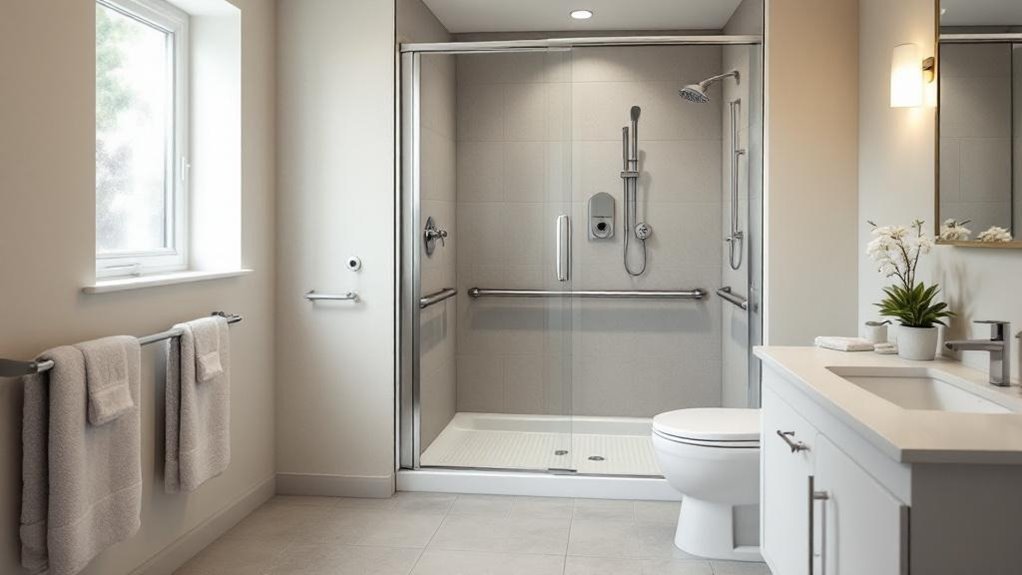
Since bathrooms present the highest fall risk in the home, you’ll want to prioritize modifications that boost traction and support. Install grab bars near toilets and showers using secure mounting into studs. Apply non-slip adhesive strips to tub and shower floors to improve grip. Consider walk-in showers or tub-to-shower conversions for easier accessibility. Raised toilet seats reduce strain on joints and decrease fall risk. Guarantee adequate lighting with motion-activated switches for nighttime safety.
In Georgia, aging in place successfully requires these practical home modifications elderly care providers recommend. Replace standard faucets with lever handles for easier operation. Remove clutter and secure electrical cords. These evidence-based interventions greatly reduce bathroom-related injuries, enabling seniors to maintain independence while you serve their safety needs effectively.
Bedroom Setup
Your bedroom modifications should prioritize nighttime safety and accessibility, as seniors spend considerable hours sleeping and traversing this space in darkness. You’ll want to install motion-activated LED lighting along baseboards and pathways to reduce fall risk during nocturnal bathroom trips. Position the bed at an appropriate height—typically 18-20 inches—allowing feet to touch the floor comfortably, facilitating independent transfers.
| Modification | Benefit |
|---|---|
| Grab bars near bed | Stable support during transfers |
| Non-slip flooring | Reduced slip hazards |
| Bedside table with lamp | Accessible lighting control |
You should remove throw rugs and clutter that obstruct walkways. Install a personal alert system within arm’s reach. Consider a bed rail or adjustable bed frame to improve stability. Guarantee adequate ventilation and maintain comfortable room temperature to prevent disorientation and falls.
Kitchen Access
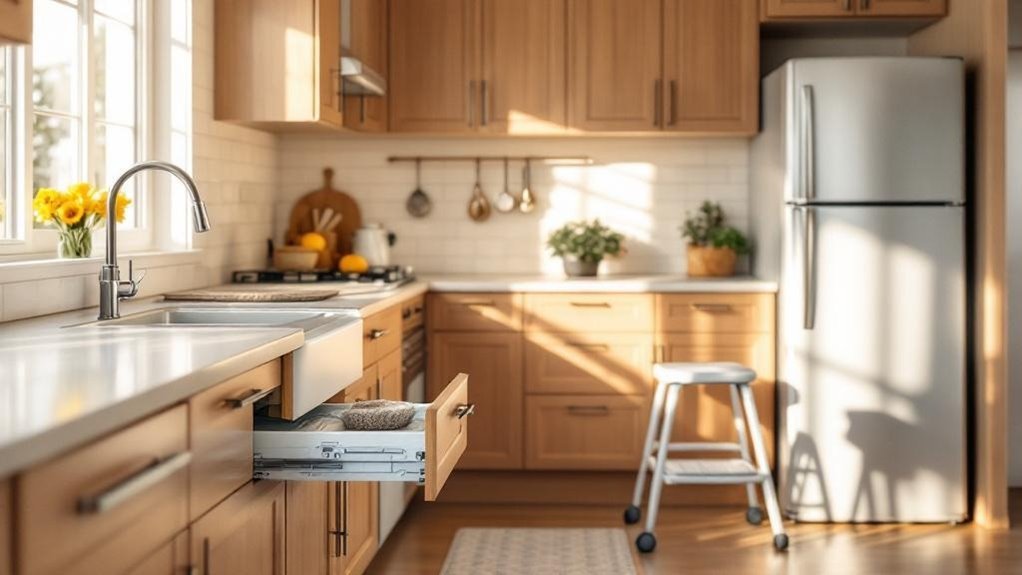
The kitchen presents distinct accessibility challenges that differ markedly from bedroom safety concerns, requiring modifications that address both mobility limitations and injury prevention during food preparation and storage tasks. You’ll want to install pull-out shelving and lower cabinets to eliminate excessive reaching and bending. Consider lever-style handles on cabinets and drawers—they’re easier to operate than knobs for those with arthritis or reduced grip strength. Position frequently used items at waist height to minimize fall risks. You should additionally install anti-scald faucets and guarantee adequate lighting near work surfaces. A seated workspace accommodates wheelchair users or those requiring rest periods. Ascertain clear floor space for mobility aids and remove trip hazards like throw rugs to maintain safe navigation pathways throughout the kitchen.
Stair Solutions
Stairs present one of the most important fall hazards in homes where elderly residents live, making thorough modifications vital for safe navigation. You’ll want to install high-contrast tape on stair edges to boost visibility and reduce missteps. Adding sturdy handrails on both sides—not just one—provides key support for balance and stability. Consider installing stair lifts or chairlifts if mobility becomes severely limited, allowing residents to traverse multiple levels safely.
You should guarantee adequate lighting, particularly at the top and bottom of staircases. Remove tripping hazards like loose carpeting or clutter. Non-slip treads improve traction considerably. For residents with advanced mobility concerns, you might relocate frequently-used items to main-floor locations, minimizing stair usage altogether. These evidence-based interventions greatly reduce fall-related injuries and promote independence.
Conclusion
You’ll practically preserve your parent’s prosperity through purposeful, proven modifications. By bolstering bathrooms with bars, bedrooms with accessibility, kitchens with convenient organization, and staircases with sturdy solutions, you’re establishing crucial environmental interventions. Evidence-based improvements—grab bars, lighting upgrades, flooring modifications—significantly substantiate senior safety statistics. You’re strategically supporting independence while simultaneously securing stability. These tactical transformations transcend typical home improvements; they’re therapeutic tools that tangibly extend your loved one’s capacity for autonomous aging-in-place living.